
On-Site EMI Survey for Active Implantable Medical Devices (AIMD)
Ensure a Safe Return to Work for Employees with Pacemakers, ICDs, S-ICDs, and Neurostimulators
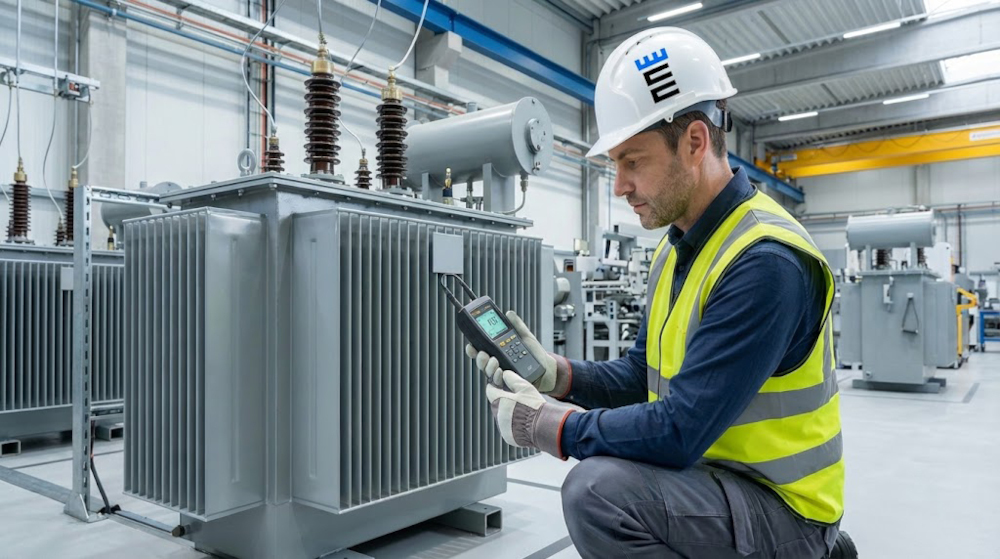
Modern life-saving implants are designed with sophisticated shielding, but industrial environments often contain specialized equipment that can produce electromagnetic interference (EMI) exceeding safe exposure limits.
At Castle Compliance, we bridge the gap between medical guidance and industrial reality. Our professional on-site engineering surveys provide the rigorous technical data needed by physicians, employers, and insurers to verify workplace safety and facilitate a confident return to work.
Why Workplace EMI Surveys are Critical for Active Implantable Medical Devices (AIMD)
Standard “safe distance” guidelines are often generic; a professional survey measures the actual environment to identify specific zones of risk before an employee returns to full duty.
If an employee encounters EMI levels above their device’s specific immunity threshold, several temporary but critical behaviors may occur:
- Inhibition of Pacing (Oversensing): The device may mistake electrical noise for a heartbeat and fail to provide necessary pacing.
- Inappropriate Therapy (ICD Shock): A defibrillator could mistake EMI for a life-threatening arrhythmia and deliver an unnecessary, high-impact shock.
- Asynchronous Pacing (Noise Mode): The device may revert to a fixed pacing rate regardless of the patient’s actual physiological needs.
- Magnet Response (Therapy Suspension): Strong static magnetic fields can temporarily disable an ICD’s ability to detect and treat dangerous rhythms.
The Return-to-Work Survey Process
Our workflow is designed to minimize downtime while providing the rigorous data required by cardiologists and safety directors.
- Preparation & Data Collection We coordinate with the employer and the patient’s physician to obtain critical device details—including model numbers, programmed sensitivity settings, and specific pacing modes—to establish the precise pass/fail criteria for the survey.
- On-Site EMF Measurement Our engineers scan the facility to capture accurate EMF measurements across the entire spectrum. We record both Peak and RMS field strength values to ensure we account for the specific biological sensing windows of the implant.
- EMI Risk Analysis & Mapping We cross-reference the measured EMF data against the manufacturer’s specific EMI immunity thresholds. We identify “zones of risk” and calculate precise safe separation distances (e.g., “Safe at 18 inches” vs “Restricted Area”) for every piece of equipment.
- Formal Compliance Reporting You receive a comprehensive, physician-ready report detailing safe operating zones, restricted areas, and actionable recommendations to finalize the return-to-work assessment.
Potential Pacemaker & ICD EMI Interactions
If an employee encounters EMI levels above their device’s specific immunity threshold (typically defined in AAMI/ISO 14117 or EN 45502 standards), several temporary but critical behaviors may occur:
- Inhibition of Pacing (Oversensing): The device may mistake electrical noise for a heartbeat and fail to provide necessary pacing.
- Inappropriate Therapy (ICD Shock): A defibrillator could mistake EMI for a life-threatening arrhythmia (like VFib) and deliver an unnecessary, high-impact shock.
- Asynchronous Pacing (Noise Mode): The device may revert to a fixed pacing rate regardless of the patient’s actual physiological needs.
- Magnet Response (Therapy Suspension): Strong static magnetic fields can temporarily disable an ICD’s ability to detect and treat dangerous rhythms.
Our EMF Testing & Survey Capabilities
We conduct comprehensive evaluations across the electromagnetic spectrum, utilizing calibrated instrumentation to ensure compliance with major manufacturer guidelines.
1. Static Magnetic Fields (DC) We measure High-G fields created by permanent magnets, DC electromagnets, or large motors.
Compliance Note: Most manufacturers, including Biotronik and Medtronic, suggest strict adherence to the 5–10 Gauss (0.5–1.0 mT) limit at the implant site.
2. Power Frequency Fields (50/60 Hz) The most common type of industrial EMI. We evaluate high-voltage power lines, transformers, and open electrical panels, measuring against the standard reference levels for general public and occupational exposure.
3. High-Frequency / Radio Frequency (RF) We survey environments with antennas, RF welding equipment, and dielectric heaters (1 kHz to 6 GHz), ensuring field strengths do not exceed the immunity levels of the specific implanted device.
In-Situ Industrial EMI/EMC Forensic Analysis
Unlike standard environmental sweeps, we perform In-Situ EMI Forensic Analysis focused specifically on the “weak links” in industrial shielding. We utilize advanced calibrated instrumentation (including Isotropic Broadband Field Probes and Frequency-Selective FFT Analyzers) to evaluate:
- Power Frequency Fields (50/60 Hz): We measure high-voltage lines, transformers, and arc welding equipment against Occupational Exposure limits.
- Transient Fields: We capture startup/shutdown spikes from large motors or VFDs that standard meters often miss.
- Modulated RF Fields: We analyze complex signals from 5G antennas, dielectric heaters, and RF welders (1 kHz to 6 GHz).
- Static Magnetic Fields (DC): We verify compliance with the strict 5–10 Gauss (0.5–1.0 mT) limit near permanent magnets and DC electromagnets.
AIMD Manufacturer-Specific EMI Compliance
We specialize in interpreting the unique threshold requirements and “safe distance” protocols for the world’s leading device manufacturers. We cross-reference our field data against the specific technical manual for the patient’s device model.
| Manufacturer | Key Compliance Focus |
| Medtronic | Verification of distance-based guidelines (e.g., <160A limits for welding) and electric field thresholds (6,000 V/m). |
| Boston Scientific | Detailed limits based on implant location (Left vs. Right Pectoral) and device type (Pacemaker vs. S-ICD/Subcutaneous). |
| Abbott | Compliance with EN 45502 standards and verification of H-field limits (typically 80 A/m) for specific pacing modes. |
| Biotronik | Specialized evaluation of fluctuating electromagnetic fields and unique anatomical shielding factors. |
Beyond Pacemakers: Comprehensive AIMD Support
While Pacemakers and ICDs are the most common, modern workforces rely on a variety of Active Implantable Medical Devices (AIMDs). Our engineers are trained to evaluate risks for the full spectrum of implants using manufacturer-specific immunity standards (such as AAMI/ISO 14117 and EN 50527):
- Cardiac Rhythm: Pacemakers, ICDs, S-ICDs, and CRT-D devices.
- Neuromodulation: Spinal Cord Stimulators (SCS), Vagus Nerve Stimulators (VNS), and Deep Brain Stimulators (DBS).
- Drug Delivery: Implantable Insulin Pumps and Intrathecal Pain Pumps.
Secure a Safe Return to Work Today
Don’t let uncertainty delay your employee’s return. Our team is ready to deploy nationwide to provide the physician-validated engineering data you need. Contact us today to discuss your specific facility requirements and receive a same-day quote for your On-Site EMI Risk Assessment.