
IPX5 & IPX6 Water Jet Testing
Validating enclosure integrity against low-pressure and high-pressure hosedowns.
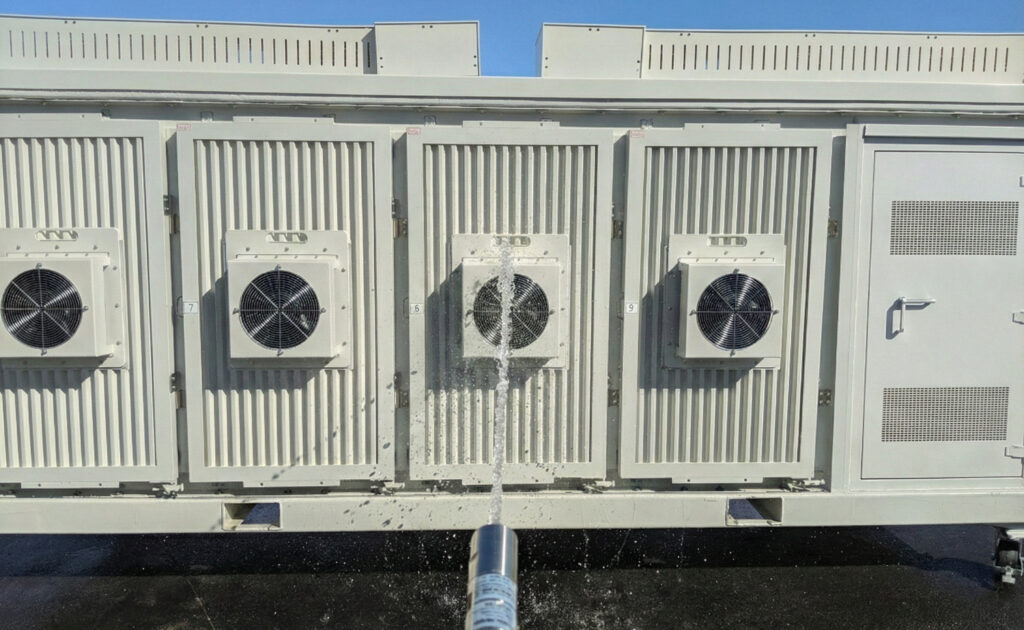
Surviving the Storm
When a product leaves the shelter of an overhang and enters the full force of the elements, rain doesn’t just fall—it drives. Furthermore, industrial equipment is often subjected to washdown procedures that are far more aggressive than the weather.
IPX5 and IPX6 are the critical ratings for equipment exposed to directional water jets.
- IPX5: General outdoor use, cleaning with a moderately intense garden hose.
- IPX6: Ship decks, heavy industrial plants, and storm-exposed infrastructure.
At Castle Compliance, we don’t just spray your product; we test its structural and sealing limits. Our ISO 17025 compliant lab features calibrated jetting systems capable of delivering the precise flow rates and pressures required by IEC 60529, ensuring your “Waterproof” claim holds water.
The Tests Explained: Water Jet vs. Powerful Water Jet
While both tests use a similar hose-and-nozzle setup, the intensity difference is massive.
IPX5: Water Jets
- The Scenario: A standard garden hose or heavy wind-driven rain.
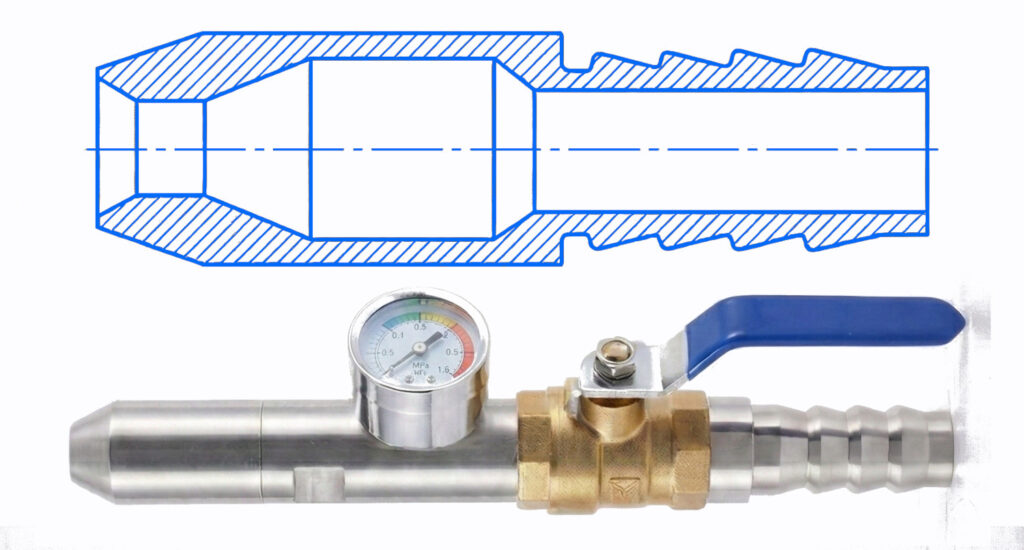
- Nozzle Diameter: 6.3 mm.
- Flow Rate: 12.5 Liters per minute.
- The Test: Water is projected at the enclosure from all practicable directions from a distance of 2.5 to 3 meters.
IPX6: Powerful Water Jets
- The Scenario: Concentrated garden hose to nearly fire hose intensity, heavy seas, or aggressive industrial washdown.
- Nozzle Diameter: 12.5 mm.
- Flow Rate: 100 Liters per minute.
- The Test: Water is projected as the enclosure from all practicable directions from a distance of 2.5 to 3 meters.
- The Challenge: The volume of water hitting your device increases by 800% compared to IPX5. This creates significant dynamic pressure that can physically deform plastic housings and blast gaskets out of their grooves.
Test Duration & Coverage
We don’t cut corners on time. The standard dictates the duration based on the size of your product.
- Calculation: 1 minute per square meter of surface area.
- Minimum: The test must last at least 3 minutes, even for tiny devices.
We ensure that the jet is directed at all possible ingress points—seams, cable glands, buttons, and displays—to leave no weak point untested.
The “Cumulative” Myth: Why IPX7 Doesn’t Cover IPX6
This is the most common misconception in ingress protection.
- The Myth: “My product passes IPX7 (Immersion), so it automatically passes IPX6 (Jets).”
- The Reality: False. According to IEC 60529, an enclosure rated for immersion (IPX7 or IPX8) is considered unsuitable for water jets unless explicitly dual-coded.
- The Physics: Immersion is static pressure (squeezing the seal). Water jets are dynamic pressure (impact force). A seal that holds underwater might deflect and leak when hit by a high-velocity jet.
- Our Solution: If you need both, we run a dual-certification test plan (e.g., IP66/IP67) to validate both conditions.
Common Failure Modes
1. Gasket Displacement The force of the IPX6 jet (100 L/min) is strong enough to lift lip seals or dislodge O-rings that aren’t seated in a deep groove.
- Castle Tip: Ensure your gasket compression provides enough friction to resist lateral forces, or design the housing to mechanically shield the seal interface.
2. The “Venturi Effect” If a water jet hits a seam at a glancing angle, it can create a localized low-pressure zone that sucks water into the housing, even if the seal looks tight.
3. Membrane Rupture Breathable vents (ePTFE membranes) are great for IPX7, but a direct hit from an IPX6 jet can puncture the membrane or debond it from the adhesive ring.
- Castle Tip: Use a protective cowl or baffle over the vent to deflect the direct energy of the water jet.
Ready for the Hose Down?
Don’t let a washdown wash out your product launch. Contact our engineering team to schedule your IPX5 or IPX6 jet testing.